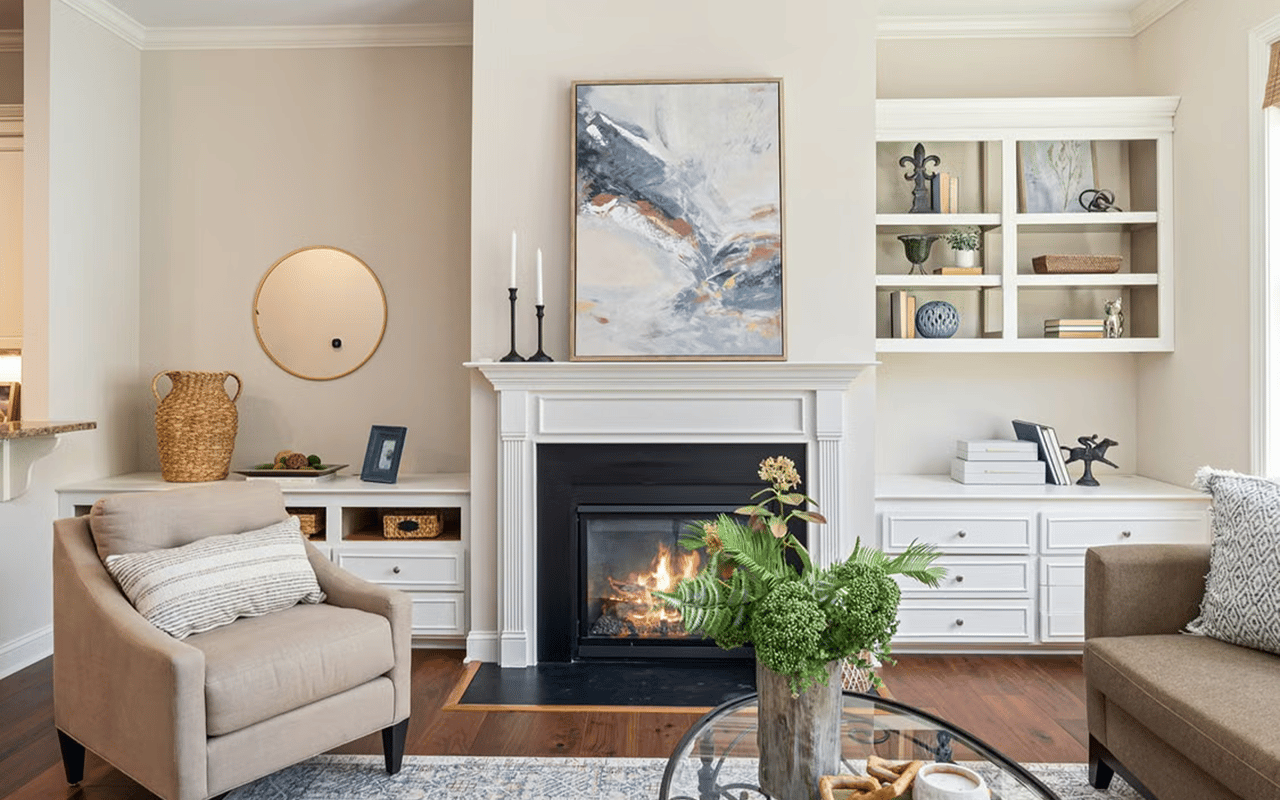
A Brentwood homeowner sat down with builder Oren Levy of Gesh Group to talk about selling. The house was worth enough to land well above Los Angeles' luxury transfer tax threshold, and once Levy ran the numbers, the math was blunt: between Measure ULA and a standard agent commission, the household stood to lose about 11 percent of the sale price before a single dollar reached their pocket. They didn't list. They renovated instead. As Levy put it, "instead of giving that money away, they reinvested into their current home."
That single decision would be a footnote if it were rare. It isn't. It's showing up in Brentwood's own sales data, and it explains something in the numbers that doesn't quite add up on first read. According to Redfin, over the three months ending in June 2026, Brentwood's median home sale price fell 21.7 percent year over year to $2.3 million. In the same window, the median price per square foot rose 7.9 percent to $989, and the typical home sat on the market for 66 days, up from 50 the year before. A falling median usually travels with a falling price per square foot. Here, they moved in opposite directions.
A Median That's Falling and Rising at the Same Time
When a median price drops while the per-square-foot price climbs, the simplest explanation is not that homes got cheaper. It's that a different kind of home is doing the selling. If Brentwood's largest, most expensive properties are being pulled out of the transaction pool, what's left to close escrow skews smaller and more mid-tier, which drags the median down even as each individual sale continues to command a rising premium per square foot. Longer time on market fits the same story: fewer highly motivated sellers at the top means less urgency and more negotiation on the properties that do come up.
That's the pattern you'd expect if a segment of homeowners quietly withdrew from selling altogether. And that's exactly what Measure ULA appears to be doing to Brentwood's luxury tier.
The Tax Cliff Behind the Behavior
Measure ULA, Los Angeles' transfer tax on high-value real estate, took effect in April 2023 and applies within the incorporated City of Los Angeles, which covers most of Brentwood. Neighboring cities including Santa Monica and Beverly Hills operate under their own transfer tax rules and are not subject to it, a boundary distinction that matters more than most sellers expect when they're pricing a home near the city line.
The thresholds adjust every July 1 based on the Chained Consumer Price Index. As of July 1, 2026, sales between roughly $5.4 million and $10.9 million are taxed at 4 percent. Sales above $10.9 million are taxed at 5.5 percent. The detail that catches people off guard is that this isn't a marginal bracket. The rate applies to the entire sale price the moment you cross the line, not just the amount above it. That structure turns a single dollar of price into a six-figure decision.
| Sale Price | Applicable Rate | Tax Owed |
|---|---|---|
| $5,399,999 | Standard transfer tax only (0.56%) | roughly $30,240 |
| $5,400,000 | Measure ULA, 4% on full price | $216,000 |
| $10,900,000 | Measure ULA, 5.5% on full price | $599,500 |
One dollar of additional sale price at that first threshold costs a Brentwood seller roughly $185,760 more in transfer tax. As the Hollywood Reporter reported when the tax first took effect, properties below the threshold still pay the pre-existing city and county transfer tax rate of about 0.56 percent, which is the baseline every seller was already paying before ULA arrived.
What the Permit Data Shows
A tax cliff like that doesn't just change how sellers negotiate. It changes whether they sell at all. Comparing single-family remodel permits pulled in the City of Los Angeles during 2018 and 2019, before the pandemic and before ULA, to the two years following the tax's implementation, Attom Data Solutions found a 46 percent increase in remodel permits for high-priced homes. Permits for mid-priced homes showed no meaningful change. The shift is concentrated exactly where the tax bites.
UCLA Anderson researcher Yingru Pan, who sourced the Attom data for a working paper on the tax's effects, put the mechanism directly: "Luxury homeowners increasingly opted to remodel rather than sell, reducing turnover and exacerbating supply constraints." That's the same dynamic Levy described from the contractor's side of the table. Before Measure ULA, Gesh Group's project mix ran roughly 80 percent new construction and 20 percent remodels. Today that split has flipped to about 60 percent remodeling and 40 percent new builds, with the renovations trending larger in scale, often stripping a home down to the studs. The firm's high-end remodels typically run between $1 million and $6 million for homes that would otherwise sell above the ULA threshold.
Not everyone treats renovation as the safer bet. Brokers close to these deals have cautioned that a gut renovation carries its own risk. There's no guarantee a $2 million remodel returns $2 million in resale value years later, and the homeowner still has to live through the disruption. The calculation isn't obviously in favor of renovating. It's that the tax has made selling obviously more expensive, which is enough to tip a marginal decision.
The same pressure shows up on the development side. Gesh Group, which also builds spec homes on Tigertail Road and elsewhere in Brentwood, has scaled back the number of new projects it takes on each year, now closer to one or two rather than the three to five it once acquired annually, a direct response to a tax that makes hitting a target price per square foot on exit meaningfully harder.
What This Means If You're Circling Brentwood
For buyers. The "softening" median you see on a portal search isn't a signal that Brentwood's best homes are getting more affordable. It's a signal that fewer of them are for sale. The inventory that would normally define the top of the market, the $6 million to $15 million properties, is more likely to be renovated in place than listed this year. If your search is calibrated to that tier, expect a thinner and more selective pool than the headline median suggests, and expect the properties that do come to market to be priced with real conviction behind the number.
For sellers. If you're weighing whether to sell or reinvest, the ULA math is worth running before you commit to either path. But a full gut renovation isn't the only way to close the value gap between an as-is listing and a market-ready one. A more targeted approach, refreshing the presentation rather than rebuilding the house, can lift a sale price without the multi-year commitment of a studs-out project. Compass Concierge is built for exactly that calculation: it fronts the cost of staging, cosmetic work, and strategic repairs with no upfront payment, so a seller can capture some of the same value lift a renovation would deliver without tying up capital or years of their life to get there.
The Brentwood market isn't cooling. It's being reshaped by an incentive sitting at the very top of it, and reading the median price alone, in either direction, will lead you to the wrong conclusion about what's actually happening on the ground.
Frequently Asked Questions
Does Measure ULA apply to all of Brentwood? Most of Brentwood sits within the incorporated City of Los Angeles and is subject to the tax. Confirm jurisdiction before assuming otherwise, since some nearby Westside communities are independent cities with their own transfer tax rules and fall outside ULA entirely.
Is the 4 percent or 5.5 percent rate charged only on the amount above the threshold? No. Once a sale price crosses the threshold, the rate applies to the full sale price, not just the portion above the line. That structure is what creates the cliff effect rather than a gradual marginal increase.
Do the ULA thresholds change every year? Yes. They adjust each July 1 based on the Chained Consumer Price Index. The thresholds have moved from the original $5 million and $10 million marks at the tax's April 2023 launch to $5.4 million and $10.9 million as of July 1, 2026.
Does renovating instead of selling avoid the tax entirely? Yes, since the tax only applies at the point of transfer. A homeowner who renovates and holds the property never triggers it. That doesn't make renovation a guaranteed win. It ties up capital and time with no certainty the market will fully repay the investment.
If you're trying to make sense of what a listing decision actually looks like in Brentwood right now, or want a clear-eyed read on where your property sits relative to these thresholds, Susan Stark Homes can walk through the specific math for your address. Request a Private Consultation to start that conversation.