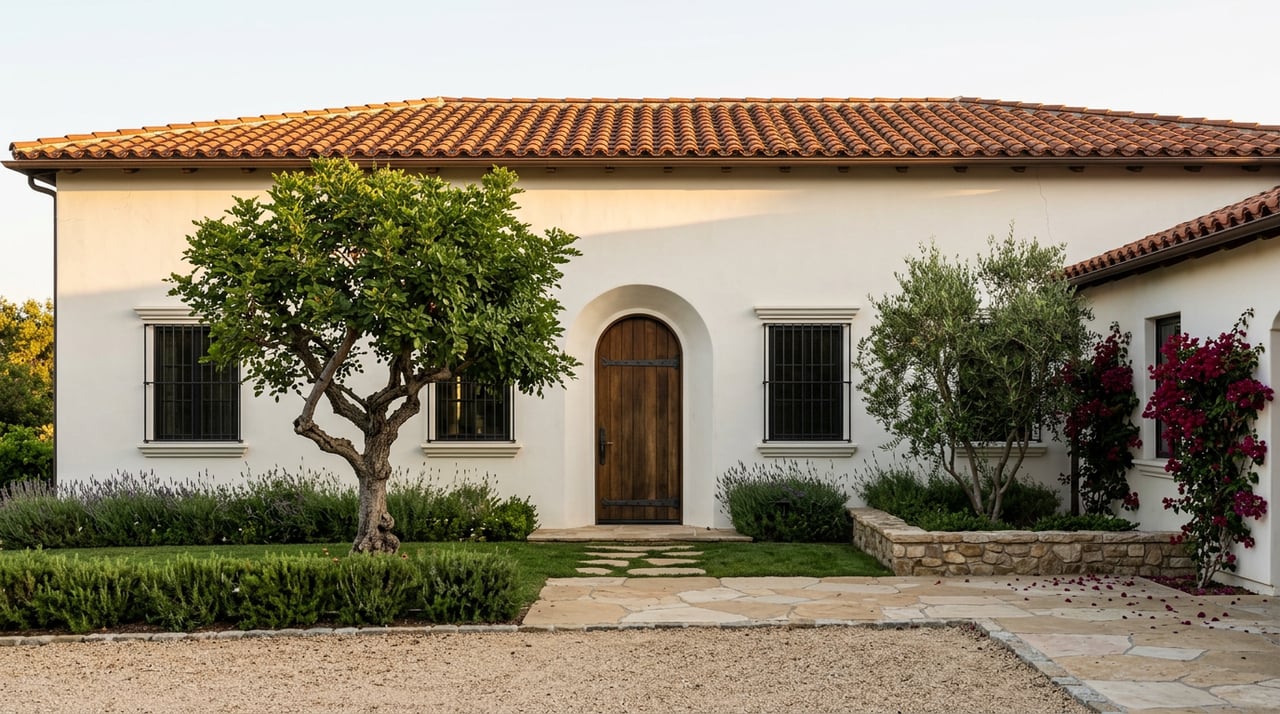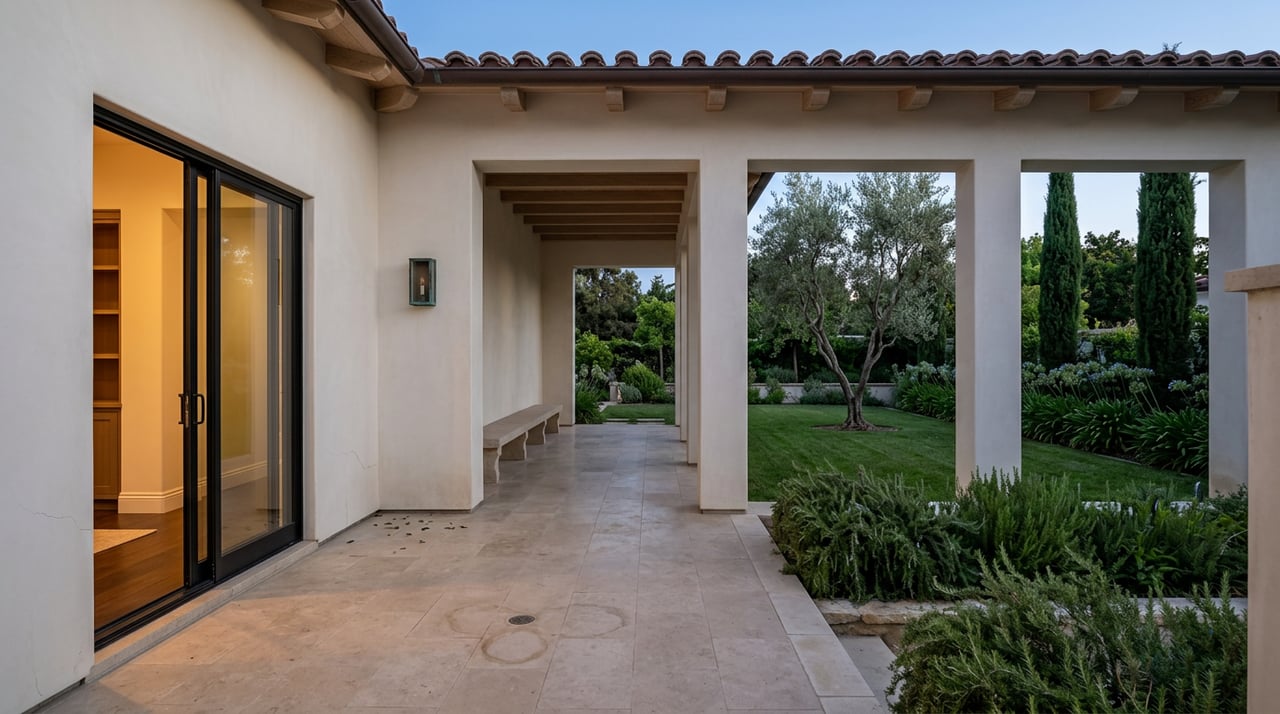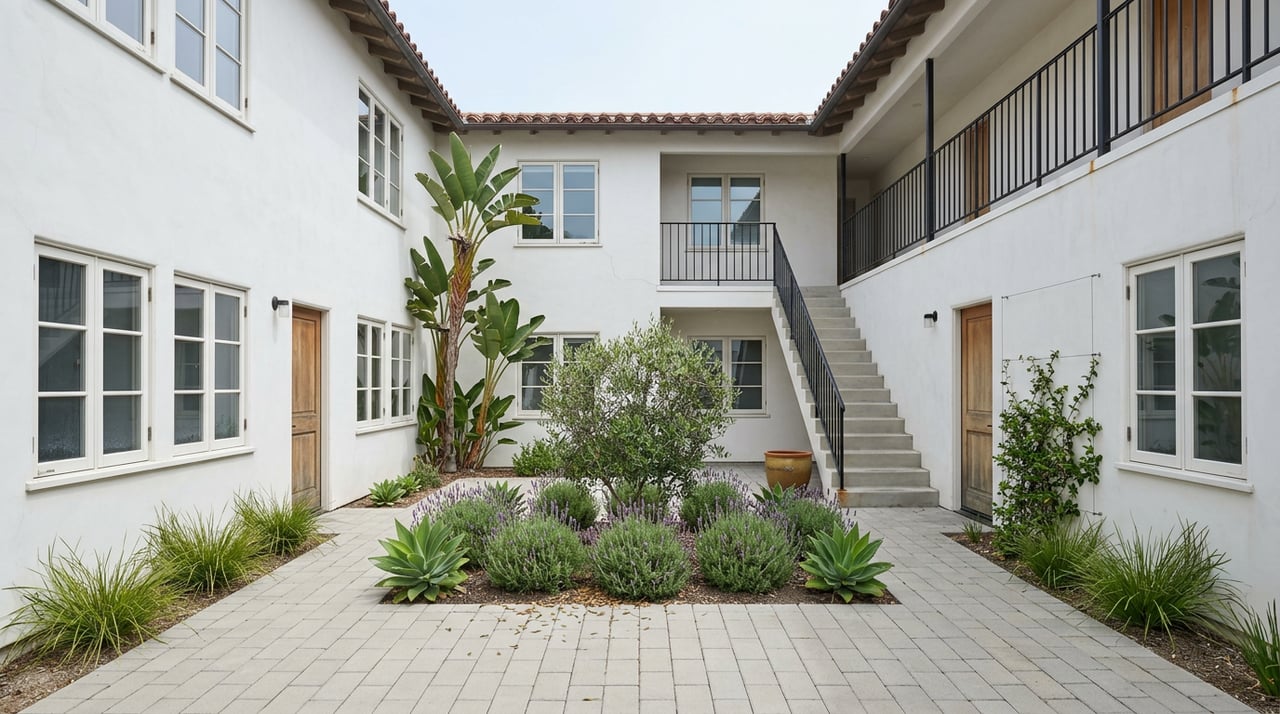
The building that stops most buyers mid-walk-through in Santa Monica is rarely the glass tower on Ocean Avenue. It is the low-slung 1950s or 60s courtyard building three blocks off Montana or tucked behind a jacaranda on 17th Street, the kind with a shared central garden, a handful of units wrapped around it, and open carport parking underneath the front unit. It reads as understated and established, the opposite of a spec-built high-rise. It is also, architecturally, almost a textbook description of the building type Santa Monica's seismic retrofit ordinance was written to find.
That is not a coincidence, and it is not a reason to walk away from the building. It is a reason to know exactly which two pieces of paper to ask for, and why the timing of this particular August makes those documents more revealing than they would have been at any point in the last several years.
The building type the ordinance is actually describing
Santa Monica's Seismic Retrofit Program, adopted by the City in March 2017 as Ordinance 2537 and codified in Chapter 8.72 of the municipal code, targets wood-frame buildings with two or more stories, two or more dwelling units, and a soft or weak first story, most commonly created by open parking, carports, or storefronts beneath living space. The City identified roughly 2,000 commercial and multifamily buildings across Santa Monica as potentially vulnerable under this and related seismic categories, with approximately 1,700 of those falling into the wood-frame soft-story class specifically.
That description covers a large share of the city's older condo and courtyard stock, the exact inventory that luxury condo buyers gravitate toward for character, walkability, and price relative to new construction. A few identifying signs if you are touring:
- Living units elevated over an open, uncovered parking area or carport
- Slim steel or wood posts visible at the garage level supporting the structure above
- Construction predating the 1980s, often with the courtyard or dingbat massing common to that era
- Two or more stories with residential use on the upper floor and no enclosed ground-floor walls
Being on the City's list does not mean a building is unsafe. Santa Monica's own program materials are explicit that inclusion reflects age, construction type, and design characteristics, not a determination that the structure is hazardous. What inclusion does mean is that the building owes the City documentation, and that documentation now has a calendar attached to it.
Two deadlines, not one
Buyers researching this topic tend to find a single number and stop there. In practice there are two separate compliance clocks running on Santa Monica multifamily buildings, and they answer different questions.
| Applies to | Governing law | Key 2025-2026 deadline | |
|---|---|---|---|
| Soft-story structural retrofit | Wood-frame buildings, 2+ stories, 2+ units, soft first story | Santa Monica Ordinance 2537 (SMMC Ch. 8.72) | Construction completion for buildings with more than two stories and fewer than 16 units was set for September 2025 |
| Balcony and elevated element inspection | Condominium associations with 3+ units, elements 6+ feet up, wood-supported | California SB 326 (Civil Code Section 5551) | Statewide initial inspection deadline was January 1, 2025, with no extension granted for condo associations |
The first governs whether the building's frame has been structurally reinforced against earthquake collapse. The second governs whether the balconies, stairways, and walkways attached to it have been inspected for rot and water damage under the state law passed after a fatal balcony collapse in Berkeley. A building can be fully retrofitted under Ordinance 2537 and still have never completed its SB 326 inspection, or the reverse. A buyer's document request needs to ask about both, separately, because a seller or listing agent volunteering one is not confirming the other.
What a missed deadline actually costs, and who it lands on
The reason timing matters more than the underlying safety question is financial, not structural. California's balcony inspection law carries civil penalties of up to 500 dollars per day for associations that miss their compliance window, a figure that compounds into roughly 182,500 dollars over a full year if left unresolved. Those fines do not attach to an individual seller. They attach to the association, which means they eventually surface in dues, in reserve draws, or in a special assessment against every owner, including whoever buys next.
As of this August, the statewide SB 326 deadline has been missed for over a year and a half for any Santa Monica association that has not yet completed its inspection. That is no longer a gray area or a pending item. It is a specific, dateable gap that a buyer can and should ask about in writing before removing contingencies.
The soft-story side carries its own version of the same mechanism. Non-compliance with Ordinance 2537 can trigger vacate orders, daily fines, loss of a certificate of occupancy, and an inability to renew rental licenses for the building, according to engineering firms that handle Santa Monica compliance work. None of that is abstract to a buyer. It is the difference between inheriting a building with a closed file and inheriting one with an open liability.
There is a real reason to check status right now rather than in a few months. The City of Santa Monica received FEMA grant funding to reimburse eligible owners for a portion of design and construction costs tied to Ordinance 2537 compliance, and the application window for that grant closes August 31, 2026. Owners must secure approval before starting construction to remain eligible, so a seller who mentions grant funding as a reason retrofit work is still pending is describing a door that closes at the end of this month, not an open-ended timeline.
The document request that tells you almost everything
Before writing an offer on an older Santa Monica condo or courtyard building, the request to the seller or HOA board should be specific rather than general. Asking whether the building has "had its earthquake work done" invites a reassuring but unverifiable answer. Asking for these four items does not:
- The building permit number and final inspection sign-off for any completed soft-story retrofit, since a City Building Inspector's final approval is the only official verification that Ordinance 2537 compliance has been achieved
- The association's SB 326 exterior elevated element inspection report, including the date it was completed and whether it was incorporated into the current reserve study
- Confirmation of whether the property appears on the City's seismic retrofit list at all, which can be checked directly against the City's own searchable tools
- Meeting minutes from the past year discussing retrofit status, FEMA grant applications, or planned special assessments tied to either compliance requirement
If the building is mid-construction on a retrofit, ask about the means and methods plan required for tenant-occupied properties, since Santa Monica requires this plan to be reviewed and approved before retrofit work can proceed, and it directly affects parking access, construction noise windows, and how much disruption an owner should expect during the work. City rules restrict construction to 8 a.m. to 6 p.m. on weekdays and 9 a.m. to 5 p.m. on Saturdays, with no work permitted on Sundays or major holidays, which is useful context for anyone weighing whether to buy into a building before its retrofit is finished.
What this means before you write an offer
The instinct to prize a Santa Monica courtyard building for its scale, its garden, and its 1960s restraint is a good one. The mistake is treating the seismic and inspection paperwork as a formality to confirm after the fact rather than a diligence item to resolve before removing contingencies. Right now, in August 2026, the paper trail on any given building is unusually legible. The SB 326 deadline has been fixed and past due since January of last year. The City's own soft-story construction deadline for smaller buildings passed nearly a year ago. And the grant window that has covered some owners' costs closes in the next two weeks. A seller with clean documentation on both fronts can produce it in a day. A seller without it is not necessarily hiding an unsafe building, but is very likely hiding a bill that has not been paid yet.
Frequently Asked Questions
Does a building's inclusion on the City's seismic retrofit list mean it is unsafe? No. The City is explicit that inclusion reflects building age, construction type, and design characteristics that warrant evaluation, not a finding that the structure is currently hazardous.
Can retrofit or inspection costs be passed on to current owners after I buy? Yes, in most structures. Special assessments tied to reserve shortfalls or retrofit construction are billed to whoever owns the unit when the assessment is levied, which is why reviewing reserve strength and recent board minutes matters as much as reviewing the inspection reports themselves.
What if the building is in the middle of retrofit construction when I'm considering an offer? Ask for the approved means and methods plan and the estimated completion timeline. Tenant-occupied buildings require this plan before construction can proceed, and it will outline expected disruption, parking impact, and whether temporary relocation is anticipated for any units.
Where can I verify a building's status myself? The City of Santa Monica maintains a searchable map and open data listing of properties identified under the Seismic Retrofit Program, which can confirm whether a specific address appears on the list independent of what a seller or HOA reports.
Diligence on a building like this is not about disqualifying the properties with the most character. It is about knowing which two documents turn a charming assumption into a confirmed fact. That is the kind of groundwork Susan Stark Homes walks every Westside buyer and seller through before an offer goes in, not after. If you are weighing a purchase in one of Santa Monica's older condo or courtyard buildings, request a private consultation and we will help you read the paperwork before you write the offer.