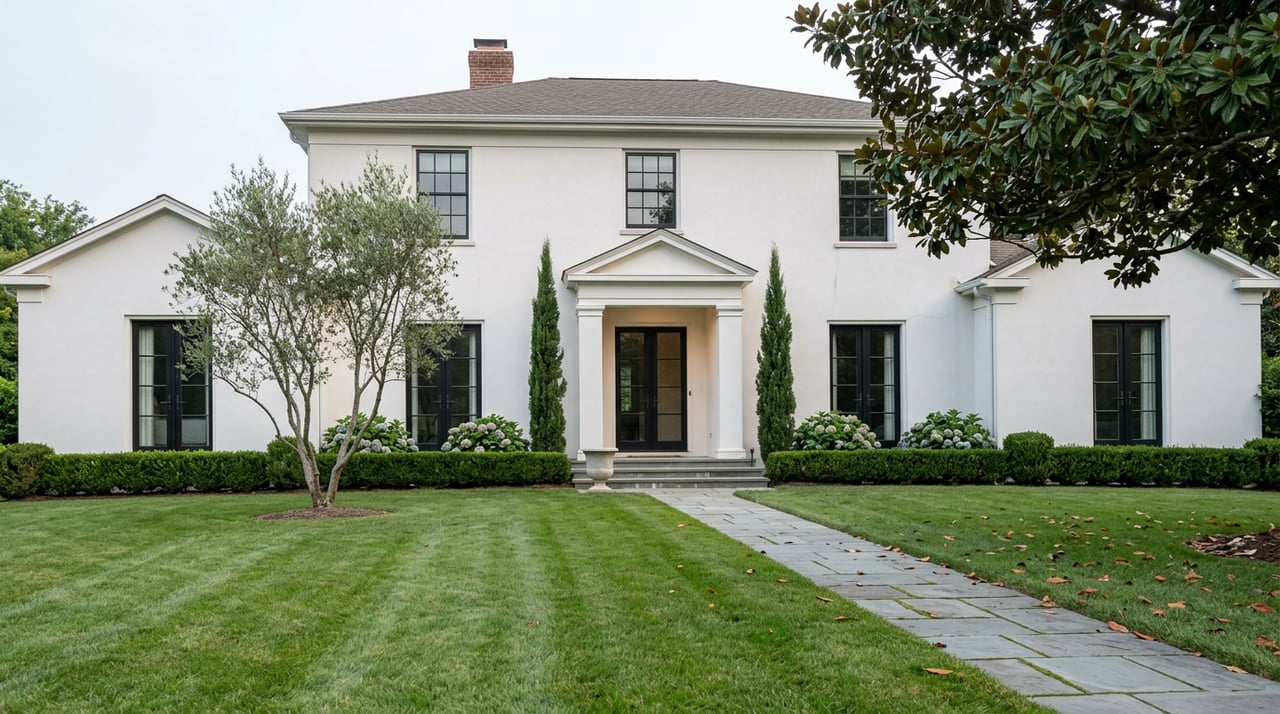
A seller listing a Santa Monica estate at $7,999,999 pays the city roughly $48,000 in transfer tax at closing. Price that same property at $8,000,000, one dollar more, and the bill jumps to $448,000. The extra dollar in sale price costs the seller about $400,000.
That is not a typo and it is not a marginal tax bracket working the way most sellers assume brackets work. It is the mechanics of Santa Monica's Measure GS, and for anyone selling a home anywhere near the city's upper price tiers, particularly in North of Montana, understanding this cliff matters more than tracking the neighborhood's headline median.
The Math Nobody Runs Before Setting an Asking Price
Most transfer taxes scale the way income tax brackets do: you pay the higher rate only on the portion of the sale above the threshold. Measure GS does not work that way. Once a Santa Monica sale price reaches $8 million, the city's 5.6% rate applies to the entire purchase price, not the amount above the line. Below $8 million, sellers pay far less: 0.3% on sales under $5 million and 0.6% on sales between $5 million and $7,999,999, according to the City of Santa Monica's own transfer tax page and a client alert from the law firm Hanson Bridgett confirming the third tier added by the 2022 ballot measure.
Run the numbers on either side of the line and the shape of the problem becomes obvious. At $7,999,999, the 0.6% rate produces a tax bill near $48,000. At exactly $8,000,000, the 5.6% rate applies to the full amount, producing a bill of $448,000. A seller who accepts an offer $1 higher effectively hands the city an additional $400,000.
Why This Line Falls Right Where Santa Monica's Upper Market Lives
A threshold like this would be a footnote in a market where nothing trades near it. Santa Monica is not that market, and North of Montana in particular is not that neighborhood. Detached home prices in ZIP code 90402 have clustered with a median near $4.9 million in recent 2026 sales data, and the neighborhood's deep lots and architectural inventory routinely push individual transactions well past that median into the $8 million to $12 million range. Citywide, the picture looks different: Redfin's tracked closings put Santa Monica's broader single-family median just under $4 million as of May 2026, a figure that includes Sunset Park bungalows and Ocean Park cottages far from the GS threshold.
That gap between the citywide number and the North of Montana number is exactly why a blended median is close to useless for pricing strategy at this altitude. The property types that make Measure GS relevant, architectural homes, canyon-adjacent estates, larger lots on the flatter streets north of Montana Avenue, are concentrated in the price band where a few hundred thousand dollars of positioning decides which tax tier applies.
| Sale Price | Tax Rate | Applies To |
|---|---|---|
| Under $5,000,000 | 0.3% | Full price |
| $5,000,000 to $7,999,999 | 0.6% | Full price |
| $8,000,000 or more | 5.6% | Full price |
A single dollar of sale price, at the wrong number, can cost a Santa Monica seller more than the entire tax bill would have been at a price $150,000 lower.
The Break-Even Number Sellers Rarely See in Advance
Because the 5.6% rate consumes such a large share of the sale price once triggered, a seller pricing near the threshold needs to clear a meaningfully higher number on the other side just to end up even. Working through the tax math on a property priced just under $8 million against one priced just over it, the seller typically needs a final price of roughly $8.43 million before the higher price actually nets more cash than staying under the line would have.
That means the practical pricing zone between $8 million and $8.43 million is, for most sellers, worse than pricing at $7,999,999 outright. A listing strategy that treats $8 million as a soft target rather than a wall to avoid can quietly cost a seller the equivalent of a full year of property taxes, in one line item, at the closing table.
The Rest of the Paperwork Doesn't Get Simpler Up Here
The transfer tax is the number that surprises people, but it arrives alongside a disclosure packet that gets more detailed as price climbs, not less. Beyond that baseline, higher-value Westside transactions tend to carry a few additional layers worth confirming early rather than discovering during escrow:
- Rent Stabilization Ordinance status
- HOA governing documents for any condominium sale
- Association reserve planning for major repairs
- Balconies, decks, and walkways in condominium buildings
None of these determine which transfer tax tier applies, but they shape how quickly a high-value sale closes once the price is set, and a seller who has already looked into them before listing avoids the kind of mid-escrow scramble that makes buyers nervous at this price point.
The Tax Itself Isn't Guaranteed to Stay This Way
Measure GS took effect March 1, 2023, and currently has no sunset date, but its long-term shape is not settled. A statewide ballot measure moving toward the November 2026 election would sharply limit local governments' ability to levy real estate transfer taxes like Measure GS, a development the Santa Monica news outlet Surf Santa Monica reported puts an estimated $50 million a year in local funding at risk.
None of that changes how a seller should price a listing going to market today. It does mean a seller sitting near the threshold with flexibility on timing has a reason to watch the November ballot rather than assume the current tiers are permanent.
What This Means Before You Set a List Price
The instinct in a competitive Westside market is to price for the highest number the property can support. Near Santa Monica's $8 million line, that instinct needs a second look. A pricing conversation for a North of Montana estate or any Santa Monica property approaching this threshold should happen before the sign goes in the yard, not after an offer arrives $1 over the line.
Frequently Asked Questions
Who typically pays the transfer tax, the buyer or the seller? By long-standing custom in Southern California, the seller pays the documentary transfer tax at closing
Is this transfer tax the same as Los Angeles's Measure ULA? No. Santa Monica's Measure GS is a separate tax with its own thresholds and rates.
Pricing a Santa Monica estate near this threshold takes more than a comparable sales report. It takes a conversation about the tax math, the disclosure timeline, and the calendar, before the number goes on the listing. Susan Stark Homes has spent three decades pricing property on the Westside at exactly this altitude. Request a Private Consultation to talk through where your number should land.
This article is general information, not legal, tax or financial advice. Consult a qualified professional about your situation.